About us
About us
An inspiration-driven local NGO committed to improving the wellbeing and resilience of communities in Malawi through integrated and sustainable development.
Vision
A healthy and resilient Malawi with sustainable environmental management, improved sanitation and hygiene, and strong maternal and child health.
Mission
To improve the health, livelihoods and resilience of communities through disease prevention, safe water, sanitation and integrated One Health approaches.
Mandate
To promote sustainable access to safe water, improved sanitation, environmental management and better health outcomes across Malawi.
Who we are
The Environment, Water and Sanitation Foundation and Associates (EWSFA) is an inspiration-driven local NGO committed to improving the wellbeing and resilience of communities in Malawi through integrated and sustainable development initiatives.
We were founded in Ntchisi District in 2010 by a team of development professionals, and formally registered in 2012 under the Government of Malawi's Trustees Incorporation Act of 1962. Over more than a decade we have grown into a reputable grassroots organisation with strong institutional systems, trusted community relationships and proven field capacity.
We work closely with local authorities, international NGOs, community-based organisations, village development committees and community groups to promote local ownership, participation and sustainability at grassroots level.
Vision
To achieve a healthy and resilient Malawi with sustainable environmental management, improved sanitation and hygiene, strengthened maternal and child health, resilient agricultural livelihoods, climate-smart communities, and sustainable water resources management at all levels.
Mission
To improve the health, livelihoods and resilience of communities through disease prevention, promotion of safe and adequate water supply, improved sanitation and hygiene, agricultural livelihood resilience, food security, environmental sustainability, climate change adaptation, and integrated One Health approaches.
Goal
To promote effective policies, practices and community-driven interventions in WASH, environmental management, One Health, maternal and child health, climate resilience and agricultural livelihood development, while ensuring sustainable access to safe water, improved health services, food security and resilient livelihoods for communities in Malawi.
Our mandate
EWSFA is mandated to promote sustainable access to safe water, improved sanitation, environmental management, better health outcomes, agricultural livelihood resilience and One Health interventions in Malawi. We work to strengthen community systems, enhance climate resilience, support disease prevention, and foster local ownership and gender inclusion in all development efforts.
Who we serve
We primarily serve vulnerable and underserved rural communities affected by inadequate access to safe water, sanitation and healthcare, by food insecurity, climate-related shocks and environmental degradation.
Our work focuses on women and girls, mothers and children, youth, smallholder farmers, people affected by HIV/AIDS, and the community structures that represent them — Village Development Committees, Water Point Committees, Village Health Committees, Area Development Committees, Community Agriculture and Nutrition Groups and Mother Groups. We have strengthened more than 400 such structures to date.
Governance and leadership
EWSFA is led by an Executive Director holding a Master's degree in Environmental Health from the University of Malawi — The Polytechnic (now MUBAS), with extensive expertise in public health, environmental management, governance and community development gained across government, private sector and civil society institutions.
The organisation maintains governance and management systems that ensure transparency, accountability and full compliance with donor and statutory requirements, demonstrated through timely reporting, sound budgetary execution and control, and results-based implementation.
Operational capacity
EWSFA maintains a functional office in Ntchisi District equipped to support project implementation, supervision, monitoring and reporting, including four desktop computers, three laptops, printers and office equipment, and two motorcycles for field operations — enabling us to reach remote communities and conduct regular field monitoring.
Coordination
We work closely with Ntchisi District Council and its coordination structures, including the District Executive Committee, District Development Committee, District Health Technical Committee, Area Executive Committees, Area Development Committees and Village Development Committees. EWSFA also serves as the Secretariat for the Ntchisi Non-State Actors Committee.
Our record, in numbers
- People reached through WASH
- 12,000 + People reached through WASH
- People with safe water access
- 7,366 People with safe water access
- Learners reached with hygiene education
- 4,800 Learners reached with hygiene education
- Field masons trained and certified
- 332 Field masons trained and certified
What we do
Our programme areas
Water, Sanitation and Hygiene (WASH)
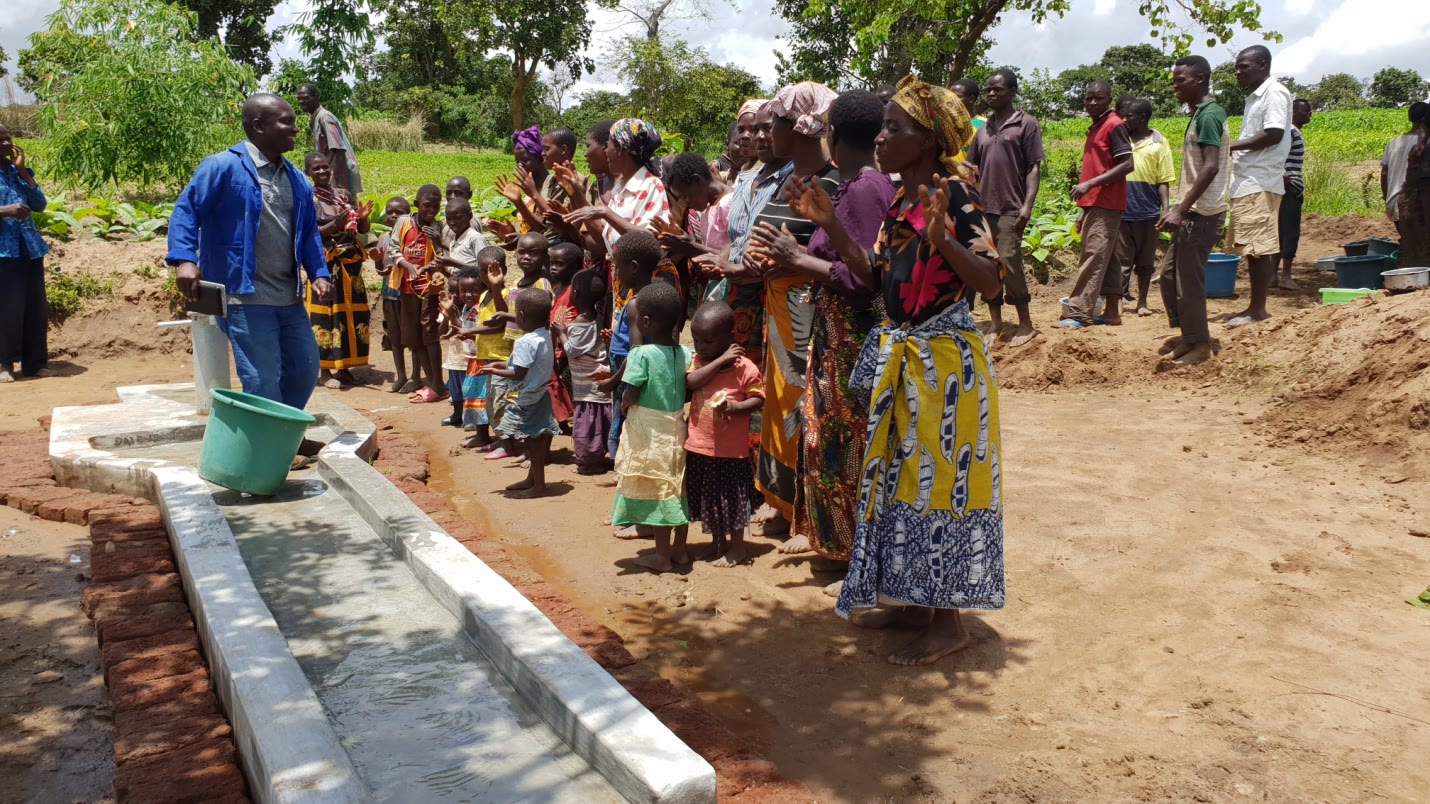
Protected wells, boreholes and solar-powered water systems, paired with sanitation and hygiene promotion and the local structures that keep them running.
Environmental Management and Climate Resilience
Farmer Managed Natural Regeneration, community tree nurseries and climate-smart practices that restore landscapes and protect livelihoods.
One Health
Linking human health, animal health, agriculture and the environment so that disease prevention and ecosystem protection reinforce each other.
Maternal, Neonatal and Child Health
Health infrastructure, outreach clinics and nutrition-sensitive agriculture that bring maternal and child services closer to home.
Agricultural Livelihood Resilience and Food Security
High-value crop production, backyard gardens and village savings groups that diversify income and improve nutrition.
HIV/AIDS and Community Health Systems
Community-led monitoring, treatment literacy and defaulter tracing that strengthen adherence and hold health services accountable.
Governance and Accountability
Citizen oversight of public resources, social accountability and inclusion of women and youth in local decision-making.
Our partners
Who we work with